Coventry’s only 5-Star Rated scaffolding company
Why Safety Is A Top Priority When Using Scaffolding
Many of the accidents recorded amongst scaffolders and on construction sites are a result of falls from height.
However, the rate of accidents and fatalities has fallen dramatically in recent years, according to the NASC safety report, thanks to the construction safety standards that adhere to the Work at Height Regulations, 2005. Safety measures for scaffolding protect workers, bystanders and property from falling materials or equipment. Adhering to the legalities means avoiding fines and legal issues as well as preventing accidents, delays and downtime meaning the overall project is more efficient – a safe project is an efficient project. Here at Rise Scaffolding, we take safety extremely seriously, making sure that all our installations are safe for our clients, our teams and the general public, and that they meet all health and safety regulations.
This blog will look more closely into methods for making scaffolding safe for anyone operating on, under or near a scaffolding installation.
COMMON HAZARDS AND HOW TO PREVENT THEM
Some of the most common hazards of scaffolding installations include:
- Workers falling from a height – due to unstable scaffolding or a lack of guardrails
- Materials, equipment or debris falling from a scaffolding tower – injuring other workers or passersby.
Less common dangers could be caused by:
- Electrical shocks from localised power lines
- Collapsing scaffolds – if the assembly has not been correctly completed or the scaffolding has been overloaded.
The best way to prevent these hazards is to have a competent and qualified scaffolding team to design your installation, ensuring it meets the required regulations and includes safety protective measures such as handrails, edge protection – including toe boards and netting – and regular inspection to ensure no wear and tear could cause an accident.
REGULAR INSPECTIONS
Regular inspections are a legal requirement of a scaffolding installation. The new installation should be inspected before any workers are allowed to begin using it and after the commencement of the work, it should be reinspected every seven days for any signs of wear and tear or problems. If any extreme weather event occurs, or any other modification takes place, the scaffolding should be reinspected for any issues that need repair or replacement.
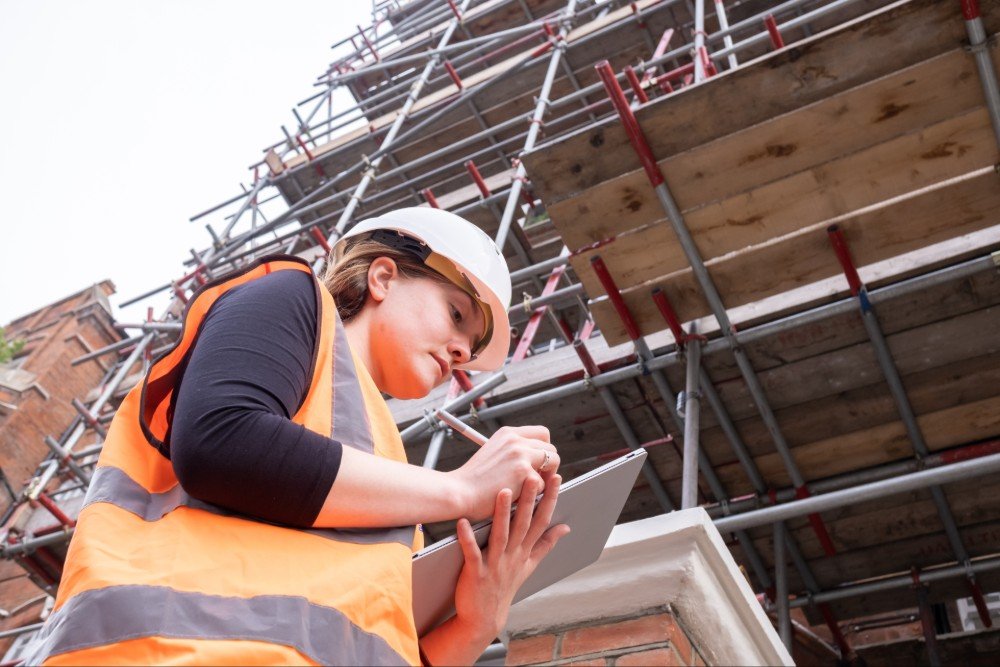
It is a legal requirement that inspections should be undertaken by a competent, qualified person who knows how to identify and address any worn, damaged or loose components.
EDGE PROTECTION
To ensure the scaffolding complies with the Work at Height Regulations, 2005, certain edge protection measures need to be put in place. The most commonly used edge protection features include:
- Guardrails – these must be attached to all scaffolding towers above two metres in height to prevent workers from falling
- Toe boards – along the edge of each platform, a toe board provides a lip to stop materials, equipment or other items from rolling off the edge
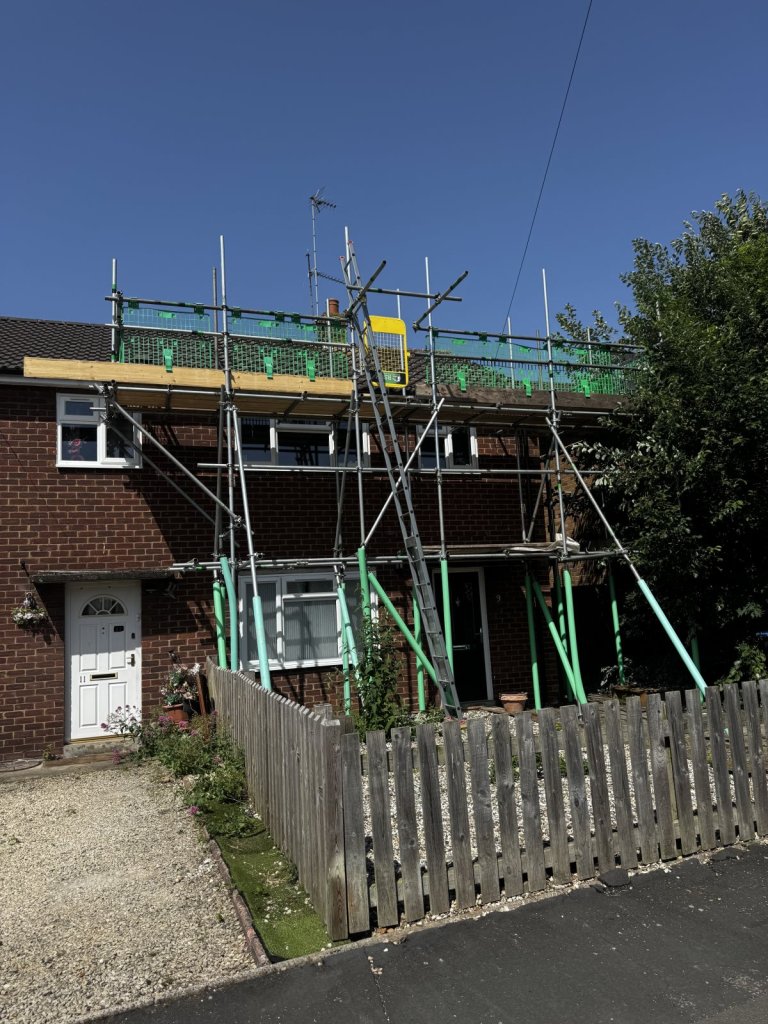
- Mesh or netting barriers – these provide extra protection against falling tools and debris and they can prevent excess dust levels for passersby as well as some weather protection for workers on the scaffolding itself.
As each scaffolding construction is unique, the edge protection will need to be customised to suit the requirements of the installation and site.
PERSONAL PROTECTIVE EQUIPMENT (PPE)
Workers are advised to wear appropriate levels of PPE to work safely on scaffolding to help protect them as they carry out their work. Recommended, and some legally required, items include:
- Helmet – to protect against falling objects
- Harnesses – to arrest any potential fall, can be clipped onto the structure
- Non-slip footwear – prevents slips and falls, especially important in inclement weather
- Gloves – protecting hands whilst carrying out manual tasks of lifting and handling.
TRAINING AND CERTIFICATION
All scaffolders should be trained in health and safety procedures, and specialised training ensures they are knowledgeable about specific scaffolding safety standards. Proper training will reduce the risk of accidents by ensuring all engineers are following the correct procedures and all those who work at height must have training in hazard identification, fall protection and safe equipment handling. It is a legal requirement for workers to be certified for specific scaffolding tasks, such as inspections. To make sure that your workers are properly trained and certified, always employ a reputable and qualified company of scaffolders, such as RSUK with our impeccable record for safety and our fully qualified teams of engineers.
NEW TECHNOLOGIES AND SYSTEMS
With many new technologies and systems available, a reputable scaffolding company will avail itself of these to benefit its clients. There are many advanced edge protection solutions to give greater levels of safety, and lightweight scaffolding installations made from aluminium offer easier handling and stability. Powered mechanical access equipment can safely manoeuvre workers and equipment to the right areas, and computer-aided software and design tools ensure that scaffolding structures are properly designed and compliant, able to handle the relevant amounts of tools, materials and workers safely.
RSUK FOR SAFE SCAFFOLDING
At Rise Scaffolding we pride ourselves on our 5-star rated service, which is built on our impeccable safety record. All our engineers are fully trained and qualified, meaning you can put your trust in us to deliver a safe and compliant scaffolding installation every time. To discover how RSUK can create and install bespoke, safe scaffolding for your project, get in touch with our expert and friendly team today for a free, no-obligation quote.
WE ARE RSUK
Related Blogs
RSUK is a reputable scaffolding business based in Coventry. We serve customers in Leicester, Birmingham, Coventry, and the surrounding areas.