Coventry’s only 5-Star Rated scaffolding company
Scaffolding Inspections Checklist: 5 Key Things to Check
Knowing about regular scaffolding inspections and requirement checklists is essential for maintaining safety standards on-site. It will help prevent accidents, injuries and ensure you comply with UK health and safety laws. Part of this process involves carrying out regular routine checks that can highlight damages, unsafe conditions and structural issues before they get a chance to grow into serious hazards.
All scaffolding inspections should be completed by following current scaffolding rules and regulations.
1. Site Conditions
Before even looking at the scaffolding system itself, the first stop in any scaffolding inspection checklist should be to check the overall site conditions. Whoever is conducting the inspection should check whether scaffolding has been erected on a stable, level and solid surface. This is crucial for load handling and stability.
The area surrounding the scaffolding itself should be clean and free of clutter such as loose materials, trailing cables and anything else that could be considered a trip hazard. It is important to remember that in line with health and safety regulations, anything that is even slightly pushing over into a designated access route is considered a trip hazard.
Reviewing the conditions of the site as a whole helps minimise the risks of slips and structural instability to maintain a safe working environment.

2. General Scaffold Inspection
A general scaffold inspection involves checking that all structural components have been assembled correctly and continue to remain in safe working condition. This includes ensuring that stands are positioned on suitable base or brace plates, scaffold legs are properly braced and that all fittings and connections are securely attached.
Scaffold inspectors should also look for signs of damage, corrosion, missing parts or any unauthorised alterations that could compromise stability. The HSE provides a full list of scaffold safety requirements and inspection guidance that should always be followed. Maintaining safe scaffolding is essential not only for employees working at height, but also for other contractors and members of the public who may be close to the site.
3. Safety Features
Scaffolding systems tend to come with built-in safety features like guard rails, toe boards and barriers. These are crucial features to prevent workers and their tools from falling at height. These safety features are the next step of a full scaffold inspection, where they need to be checked to ensure they still remain properly fitted.
Access points and working platforms should also be assessed to confirm they remain stable and unobstructed. Another important consideration is load-bearing capacity, ensuring the scaffold is capable of safely supporting workers, tools and materials without exceeding its intended limits.
Regular checks of these safety features are critical in helping to reduce the likelihood of accidents and ensure ongoing compliance with safety standards.
4. Supported Scaffolds
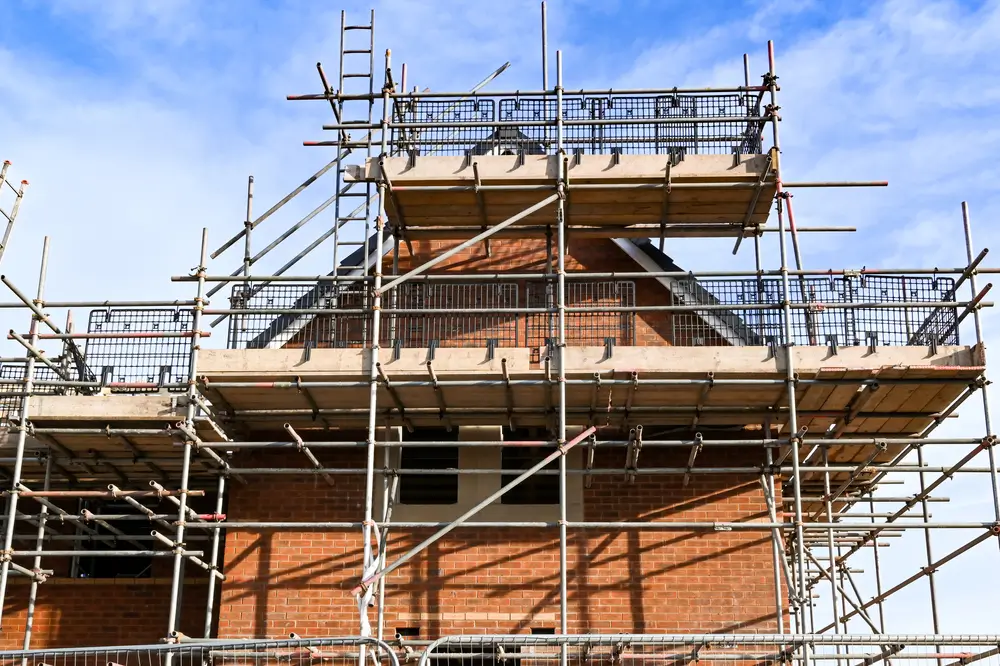
Supported scaffolds refers to scaffolding structures that have been secured to a building or fixed structure rather than being completely free-standing. Because of their innate reliance on the building for additional stability, inspections should confirm that all ties, braces and other key anchor points are all correctly installed and will remain secure throughout use, regardless of how long that may be.
One of the most important checks is ensuring the scaffold follows the 3-to-1 rule, which helps maintain safe height-to-base proportions and reduces the risk of overturning.
5. Scaffold Access
Safe access is a key part of any scaffolding inspection. All workers should be able to get on and off the scaffold safely using a properly installed regulation staircase system, ladder tower or designated access point.
Staircases and ladders should be securely fixed, positioned at the correct angle and extend sufficiently above the landing area for safe entry and exit.
Access routes should also remain clear of tools, materials and debris at all times.
Following the correct procedure here provides safe and reliable scaffold access, which will help to greatly reduce the risk of falls, improve efficiency on site and ensure workers can move between levels safely and with ease throughout the whole of the project.
When Should You Carry Out Scaffolding Inspections?
Scaffolding inspections should be carried out in three key situations:
- before the scaffold is used for the first time
- every seven days while it remains in place
- after any event that could affect its structural integrity, like severe weather, alterations, modifications or accidental damage.
These regular checks help ensure the scaffold remains safe and compliant at all times.
It is important to remember that by law, all scaffolding inspection checklists must be completed by a competent and qualified person on-site with the appropriate knowledge and experience. This is yet another reason why choosing a trusted scaffolding contractor is essential.
Professional Scaffolding Services With RSUK
At RSUK, we provide safe, reliable and fully compliant scaffolding solutions for projects of all sizes. Explore our commercial scaffolding, industrial scaffolding and domestic scaffolding services to find the right solution for your project. As Coventry’s first and only NASC approved scaffolding contractor with a 100% rate of five star reviews, we’re recognised for maintaining the highest standards of safety and workmanship.
To get expert advice on your requirements or to request a free quote, contact our team today on 024 7531 4576, by emailing enquiries@rsuk.org.uk or filling out our contact form.
WE ARE RSUK
Related Blogs
RSUK is a reputable scaffolding business based in Coventry. We serve customers in Leicester, Birmingham, Coventry, and the surrounding areas.