

Coventry’s Only 5-Star Rated Scaffolding Company
Domestic Scaffolding
Home improvement work is much easier to manage with proper access. RSUK provides domestic scaffolding for homeowners, builders, roofers and other trades working on houses and residential properties across Coventry, Birmingham and the surrounding areas.
From roof repairs and extensions to renovations and external maintenance, our experienced and qualified scaffolders erect and dismantle scaffolding to provide safe, stable access for workers, tools and materials. With more than 40 years of experience, we can provide domestic scaffolding for projects of different sizes and requirements.

WE ARE RSUK
DOMESTIC SCAFFOLDING SERVICES
RSUK provides domestic scaffolding services for homeowners and the tradespeople carrying out work on their properties. Our service covers domestic scaffold hire, scaffold supply, professional erection and dismantling, along with access scaffolding, working platforms and scaffold towers.
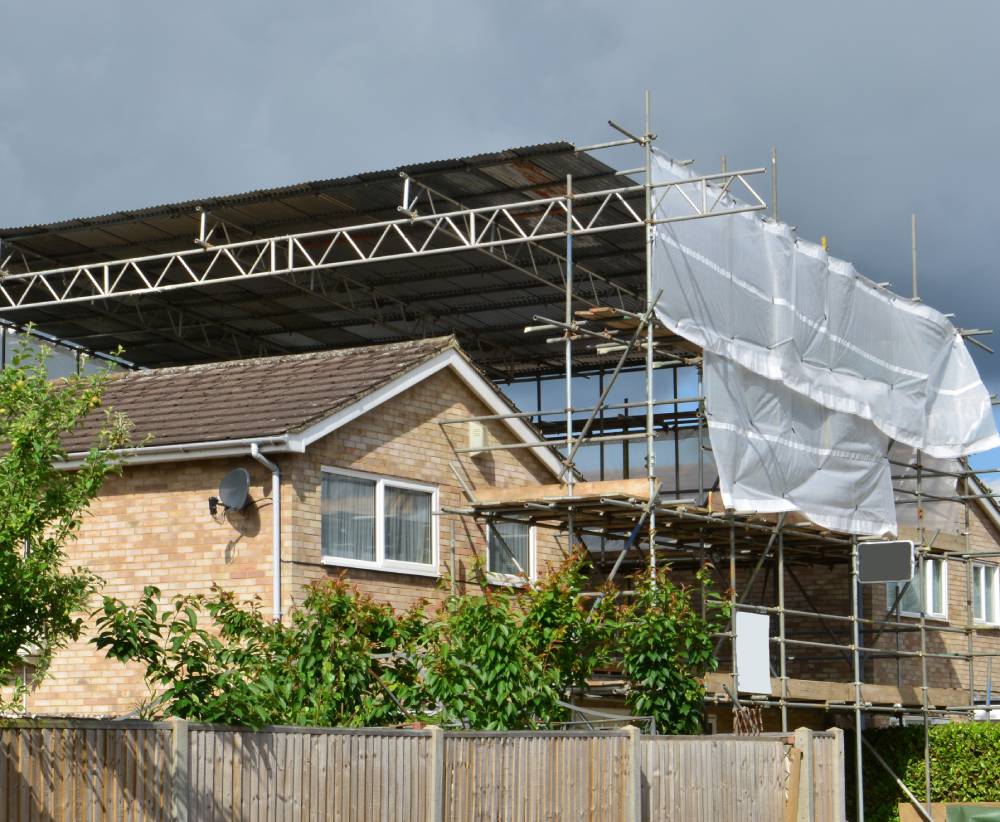
We can also provide temporary roof scaffolding where the work calls for additional weather protection, as well as bespoke scaffold arrangements built around the individual property. That might mean a straightforward short-term scaffold for a roofing job or a longer installation supporting an extension or renovation.
Need scaffolding for your home? Get in touch with RSUK to tell us about the property and the work you have planned.
WE ARE RSUK
Domestic Scaffolding Designed Around Your Property
Scaffolding For Restricted Access
Terraced houses and homes with rear extensions can leave relatively little room for scaffold installation. Side passages may be narrow, while some rear gardens have no straightforward access from the road.
Restricted access does not automatically mean scaffolding cannot be used. The available space needs to be assessed so a suitable arrangement can be established for the property and the work being carried out.
Where a scaffold needs to extend onto or over a public pavement or highway, a licence from the relevant local highway authority is required.
Protecting Your Property

WE ARE RSUK
How Our Domestic Scaffolding Service Works
If you have never hired scaffolding before, you do not need to know the technical details before getting in touch. Start with the project and the property. We can take it from there.
1. Tell Us About Your Project
Let us know what work you are planning, the type of property, where it is located and roughly when the scaffold will be needed. It is also useful to flag anything obvious about access, such as a narrow side passage, conservatory or restricted driveway.
2. Assess Your Property
3. Erect Your Scaffolding
4. Complete Your Home Improvement Work
5. Dismantle the Scaffolding
WE ARE RSUK
Domestic Scaffolding For Your Home Improvements
Domestic scaffolding is used across a wide range of renovation, repair and maintenance jobs where tradespeople need reliable access above ground level.
Roofing and Roof Repairs
Roofing is one of the most common reasons for putting scaffolding around a house. A suitable scaffold gives roofers a stable place to work while completing roof replacements, individual repairs, tiling or slate work.
The same access can be useful when a project also involves chimney repairs, guttering or the replacement of fascias and soffits, particularly when several sections of the roofline need attention.
Home Extensions
Building an extension can involve work at several different heights as new walls rise and the roof is constructed. Domestic scaffolding can support brickwork, roofing and external finishing on rear and side extensions as well as two-storey additions.
It is also commonly used during loft conversions where contractors need external access to the existing roof or new parts of the structure. The scaffold arrangement can be planned around the layout of the extension and the parts of the original property that remain in use.
Rendering, Painting and External Finishing
Rendering or decorating a whole elevation involves far more than reaching one isolated spot. Scaffolding gives contractors a working platform that follows the outside of the property, helping them move across the area being worked on.
It can be used for rendering, repointing, painting, cladding and other external maintenance where prolonged or repeated access to upper sections of the building is required.
Windows, Guttering and External Repairs
Upper-storey window replacement, gutter repairs and work on fascias or soffits often means working along awkward sections of the outside of a house. Access scaffolding can be positioned so the relevant elevations and roofline can be reached safely.
It is also useful for general high-level repairs where tradespeople need room to work rather than simply reaching the area from a ladder.
Chimney Work
Chimneys are one of the highest and often most exposed parts of a residential property. Scaffolding can provide a suitable working area for chimney inspections, repointing, repairs, flashing work or planned removal.
The scaffold layout will depend on the roof, chimney position and the work being carried out, with access planned around the individual property.
Accreditations


WE ARE RSUK
Do I Need Scaffolding For My Home?
It depends on the work being carried out and the safest way for the tradespeople involved to reach it. Work at height must be properly planned, with the risks assessed and suitable equipment selected for the job.
Scaffolding may be appropriate for roof and chimney work, extensions, rendering, painting, window replacement or repairs to external walls. It is also widely used for larger home improvements where contractors need to work at height for an extended period or move along different parts of the building.
A scaffold can give tradespeople stable working platforms, safe access to the required areas and suitable fall protection. It can also make it easier to work with the tools and materials required for the job rather than repeatedly working from ground level.
If you are unsure what your project requires, speak to RSUK about your domestic scaffolding requirements.
HEALTH AND SAFETY
Safe Domestic Scaffolding
For a homeowner, scaffold safety does not need to be buried beneath technical terminology. The important thing is knowing that the structure has been professionally erected, provides suitable access and is checked while it remains in use.
Safe Access and Working Platforms
A properly erected domestic scaffold gives tradespeople stable working platforms with appropriate fall protection such as guardrails and toe boards where required. Access also needs to be suitable for the scaffold and the work being carried out.
These features give contractors a more appropriate place to work at height and help reduce the risks of people or materials falling from the working area.
Scaffolding Inspections
Scaffolding needs to remain safe after it has been erected, particularly where a project lasts for several weeks.
Where a person could fall two metres or more, HSE states that scaffolding must be inspected by a competent person on completion and at least every seven days thereafter. Further inspections may be needed after bad weather, while a scaffold must also be checked following modification. These checks help identify damage, defects or changes that could affect its stability or safe use.
Keeping Homeowners and Others Safe
A residential scaffold sits much closer to everyday life than one inside a closed construction site. Residents may still be using the property and neighbours, visitors or pedestrians can be nearby. Children also require particular consideration because scaffolding can attract unauthorised climbing.
Access arrangements and the area surrounding the scaffold therefore need to be managed appropriately throughout the job. HSE specifically highlights the need to consider unauthorised access to scaffolding in residential areas and the risks posed to children and other members of the public.
Clients we've worked with


OUR REVIEWS
What Our Customers Say About Us
Don’t just take our word for it, see what our contented clients have to say about our high-level services.


HELPFUL INFORMATION
FAQs
HOW OFTEN IS DOMESTIC SCAFFOLDING INSPECTED?
For scaffolding from which someone could fall two metres or more, HSE requires an inspection by a competent person when the scaffold is completed and before use, followed by inspections at least every seven days.
Extra inspections may be necessary following bad weather and an inspection is required after the scaffold has been modified.
IS DOMESTIC SCAFFOLDING SAFE?
CAN SCAFFOLDING BE INSTALLED WHERE ACCESS IS REQUIRED?
CAN YOU ERECT SCAFFOLDING ON A TERRACED HOUSE?
CAN SCAFFOLDING BE ERECTED AROUND AN EXTENSION?
HOW LONG WILL SCAFFOLDING STAY UP?
HOW MUCH DOES DOMESTIC SCAFFOLDING COST?
DO I NEED SCAFFOLDING FOR ROOF REPAIRS?
WHAT TYPES OF HOME IMPROVEMENTS REQUIRE SCAFFOLDING?
WHAT IS DOMESTIC SCAFFOLDING?
AT WHAT HEIGHT DOES SCAFFOLDING NEED RAILS?
DO YOU NEED A PERMIT OR CERTIFICATE FOR SCAFFOLDING?
CAN I PUT SCAFFOLDING UP MYSELF?
DO RSUK’S DOMESTIC SCAFFOLDING SERVICES COVER MY LOCATION?
AT WHAT HEIGHT DO YOU NEED SCAFFOLDING?
DO I NEED A PAVEMENT LICENCE FOR A MOBILE TOWER?
HOW LONG DOES IT TAKE TO SET UP DOMESTIC SCAFFOLDING?
LOCAL SCAFFOLDING EXPERTS
More Scaffolding Services

Internal Scaffolding

Scaffolding Erection and Dismantling
