Coventry’s only 5-Star Rated scaffolding company
The History of Scaffolding in Construction: Types and Modern Uses
Scaffolding has been a vital part of construction activities for centuries, evolving from simple wooden frameworks to the advanced systems still seeing widespread use on modern building sites today. As structures have grown more complex, so too have the methods used to safely support workers and materials at height. Understanding the history of scaffolding, what scaffolding is used for and how it has developed over time will provide valuable insight into today’s industry standards and innovations.
In this guide, we’ll explore the history of scaffolding, including when scaffolding was invented, the different types used across construction projects, and how modern systems are designed for efficiency, safety and total flexibility.
Prehistoric Scaffolding (Pre-600 BCE, Europe)

Virtually as far back as you can go into pre-history, where the timeframe changes depending on your part of the world, a form of scaffolding can be found in use. In Europe, as far back as 17,000 years ago there is evidence of rudimentary scaffolds being used in the Paleolithic cave system of Lascaux in France, known as the Sistine Chapel of Pre-history, where over 600 paintings are found spreading into the highest spots. What is even stranger to think about, is that this was over 280,000 years after the first semblance of what we would call “modern humans” started to evolve.
This scaffolding was not as sophisticated as it is today of course, and mostly consisted of logs being lashed together with vines or sinew and situated in holes directly scraped into the wall. But nonetheless, like with all things, that initial spark spread. These basic structures would then go on from the Paleolithic to the Neolithic era and act as inspiration for more permanent settlements, leaving behind the nomadic hunter-gatherer lifestyle.
Scaffolding in the Ancient World (600 BCE-476 BCE, Europe)

Early forms of scaffolding can be traced back to most ancient civilisations, where simple yet highly effective structures were used to support large-scale construction.
In Ancient Egypt, workers (not aliens) building the pyramids relied on basic scaffolding made from timber and rope, alongside ramps and platforms, to move materials and work safely at height. While these systems were far less advanced than modern designs, they demonstrate an early understanding of the need for temporary support structures in complex builds and how leveraged force, strong foundations and pulley systems could be used to transport heavy weights.
Similarly, during the initial phases of what would become the Great Wall of China in 7th Century BCE, their builders used rudimentary scaffolding constructed from locally sourced bamboo. These materials provided a flexible and lightweight framework that could be adapted to the challenging terrain that was found along the Northern border and the Silk Road. The use of bamboo, in particular, proved highly effective due to its strength, minor flexibility and availability, laying the foundations for scaffolding techniques still used in parts of the world today.
Although these early methods lacked the engineering precision seen in modern scaffolding, they were crucial in enabling some of the most iconic construction projects in history. They highlight how essential temporary structures have always been in supporting construction teams to build safely and efficiently, even during ancient times.
Scaffolding During the Medieval Ages (476 BCE-1450 CE, Europe)

During what is considered the Medieval period across the world and following on from the Iron Age, this timeframe saw countless industrial advancements including upgrades and wider usage of scaffolding systems. Particularly across Europe, the increased building of large cathedrals required complex wooden scaffolding systems, often constructed from timber poles lashed together with rope. Skilled workers, sometimes referred to as “scaffolder monks,” played a crucial role in designing and assembling these structures, allowing stonemasons to work safely at significant heights while shaping intricate architectural details.
Beyond Europe, scaffolding techniques also evolved during the continued construction and reinforcement of what is now recognised as the Great Wall of China, which was started around 1368 BCE. Builders relied on adaptable wooden and bamboo frameworks to navigate difficult terrain, supporting both vertical construction and the transport of materials across long distances. These systems demonstrated increasing sophistication in both design and practical use.
The foundations of medieval era scaffolding can be traced back to Ancient Rome, with many Roman techniques such as the use of wooden frames, platforms and hoisting systems, influencing medieval construction practices. The same style of scaffold hoist systems was also used around the trade islands in Greece. These methods were refined over time, enabling more stable and efficient scaffolding structures. As a result, scaffolding became an essential component in delivering the complex and enduring buildings that defined the medieval landscape, from stunning cathedrals and palaces to the Sistine Chapel and more.
The Industrial Revolution (1760 CE – 1840 CE, UK)
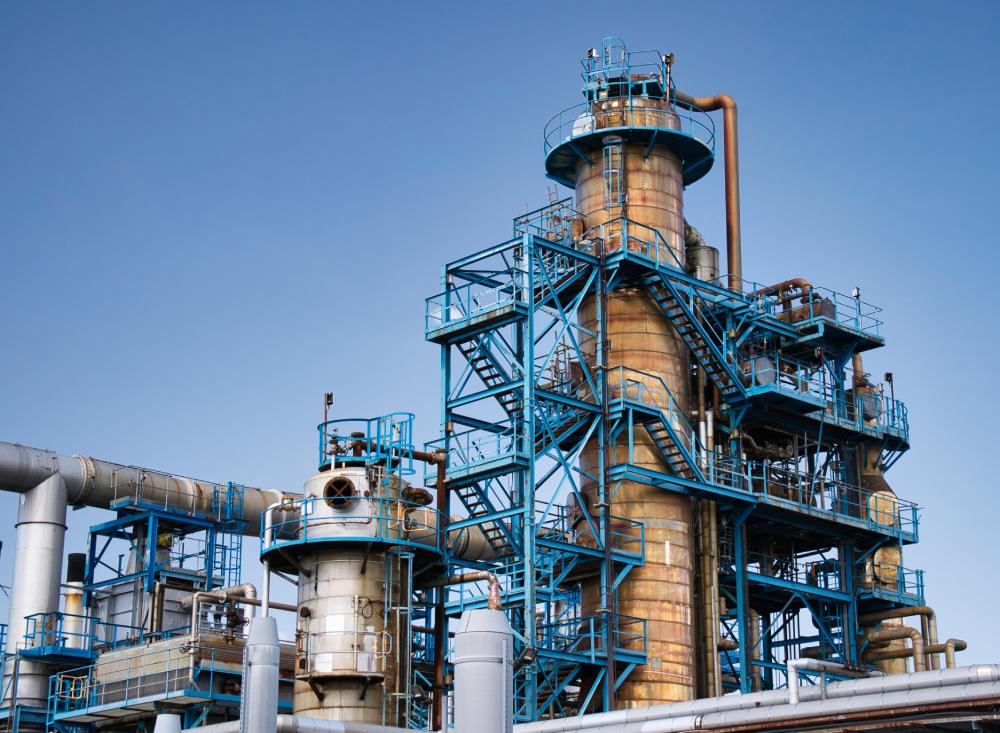
The Industrial Revolution marked a turning point in the development of scaffolding. As construction projects became larger and more complex, traditional timber structures started to need supplementation and eventually modernisation, with stronger, more reliable materials. The introduction of iron and, later, steel, allowed for the creation of far more robust scaffolding systems, improving both safety and load-bearing capacity on increasingly demanding building sites.
With these material advancements came innovation in design and assembly. Standardisation began to emerge, enabling scaffolding to be erected faster and more consistently across different projects. This shift supported the rapid expansion of industry and urban development during the period, where efficiency and durability were essential.
Later developments in the evolution of scaffolding were driven by pioneers such as Daniel Palmer Jones and David Henry Jones. Their work in refining metal scaffolding systems and introducing improved coupling methods helped shape the modern scaffolding industry. These innovations laid the groundwork for the modular, secure and highly adaptable scaffolding solutions widely used in construction today.
Modern Scaffolding

Considered the ‘fathers’ of modern scaffolding, in the early nineteenth century, David Henry Jones and Daniel Palmer Jones went down in the history of scaffolding as the people who standardised the modular parts that could be used to create scaffolding structures and hold the parts together more securely than rope, like the universal coupler. The brothers were then hired to renovate Buckingham Palace, where they experimented with and worked on many of their new techniques and equipment that changed what scaffolding was and is used for.
Even today, many of the same components that the Jones brothers created over a century ago are still being used, along with many improvements and refinements. The end of the Second World War meant many houses and buildings needed rebuilding on a scale never seen before. The widespread scale of this project required a great deal of unskilled workers to help, which led to many accidents and, therefore, greater safety measures being introduced. This includes various additions, such as plastic sheeting to weatherproof scaffolding boards from becoming slippery in wet weather, as well as harnesses to prevent falls.
Modern developments in lightweight materials, such as aluminium and other composites, have helped to create greater strength and versatility, and the addition of other safety measures has helped to make the scaffolding we walk past with our morning coffee what it is today.
The Different Types of Scaffolding
Modern scaffolding systems come in a variety of forms, each designed to suit different project requirements, environments and working heights. Choosing the right type is essential for ensuring total safety, efficiency and ease of access on-site.
- Supported Scaffolding – Built from the ground up using frames or poles, this is the most common type of scaffolding, ideal for general construction and providing stable, load-bearing platforms at varying heights
- Suspended Scaffolding – Hung from the top of a structure using ropes or chains, this type is often used for maintenance tasks like window cleaning or exterior repairs on tall buildings
- Mobile Scaffolding – Mounted on wheels or castors, mobile scaffolding towers can be moved around a site, making it perfect for smaller tasks
- Trestle Scaffolding – Supported by tripods or ladders, this lightweight option is typically used for indoor work at lower heights, like painting, plastering or maintenance tasks.
For a more in-depth breakdown by our experts on each system, take a look at our guide to the different types of scaffolding.
RSUK: Your Local Scaffolding Experts
Whilst we can’t claim that RSUK’s scaffolding services have been around for 17,000 years, as a company we have been serving Coventry and the Midlands area for their scaffolding needs for several decades. As this historical guide should prove, there is little our experts don’t know about scaffolding, which puts us head and shoulders above the rest. We have an impeccable safety record and are the only fully 5-star rated, NASC approved scaffolding contractor in Coventry.
With our design software and expertise, there’s no job too big or too small for our team to figure out the perfect, safe scaffolding installation to get the project completed successfully. We go above and beyond other contractors to deliver reliable domestic, industrial and commercial scaffolding for homeowners, local authorities and businesses alike.
Get in touch with our friendly team for your free, no obligation quote by filling out our contact form, emailing enquiries@rsuk.org.uk, or by giving us a call on 024 7531 4576 for our Coventry office or 0121 820 3456 for our Birmingham office.
WE ARE RSUK
Related Blogs
RSUK is a reputable scaffolding business based in Coventry. We serve customers in Leicester, Birmingham, Coventry, and the surrounding areas.