Coventry’s only 5-Star Rated scaffolding company
Scaffolding Edge Protection: Requirements, Regulations & Safety Features
Scaffolding edge protection provides collective fall protection around the exposed edges of working platforms. This is an essential system in helping prevent people, tools and materials from falling below. Common systems include guardrails and toe boards.
The exact configuration of what is needed will all depend on the scaffolding design, the work being undertaken and any site-specific risks. The RSUK experts have compiled this guide to outline the requirements in the UK for scaffold edge protection, the components that are commonly used and the varying levels of protection that should be maintained throughout the proposed project itself.
What Is Scaffolding Edge Protection?
Scaffolding edge protection is the collective fall protection that has been fitted around any exposed scaffold edges. Guardrails are primarily used to prevent people from falling while working from height, while toe boards, brick guards and other safety measures are used to mitigate tools or materials falling through.
Safety measures such as these may be needed around working platforms, scaffold lifts, loading bays and various exposed ends. These should be seen as “collective controls” that keep the area safe in multiple ways rather than a singular focus.
What Are the UK Legal Requirements for Scaffolding Edge Protection?
The Work at Height Regulations 2005
Work at Height Regulations of 2005 apply whenever a fall that could lead to injury is possible. The regulations require work to be planned, assessed for risks, appropriately supervised and undertaken by qualified professionals, using equipment that is suitable.
Scaffold Guardrail Height Requirements
For construction work, the Work from Height Regulations 2005 outline that the top guardrail must be at least 950 mm high, with unprotected vertical gaps no greater than 470 mm.
Toe Board Requirements
Toe boards must be suitable and sufficient for the risk, which is to help prevent people, tools and materials falling from platforms. The HSE guidance around this subject is that they must be 100 mm minimum.
Who Is Responsible for Scaffold Safety?
Safety duties can fall on employers, contractors, self-employed workers and others controlling work at height. Scaffolders, site management and principal contractors may also hold responsibilities relevant to their roles.

What Does Scaffolding Edge Protection Typically Include?
Top Guardrails
Top guardrails form the upper section of the protective barrier around exposed working-platform edges. This positioning and height levels are intended to stop workers being able to step or fall past the edge.
Intermediate Guardrails
Intermediate rails reduce the open space beneath the top guardrail. For construction work, protection must be arranged so any unprotected vertical gap does not exceed 470 mm.
Toe Boards
Toe boards form a barrier at platform level, reducing the risk of workers’ feet, tools, materials and loose objects passing or being kicked over the edge.
Brick Guards and Mesh Panels
Both brick guards and mesh panels provide extra protection against falling materials. They should be used as a supplement to guardrails and toe boards, not a replacement when it comes to fall protection.
Loading Bay Gates and Edge Protection
Loading areas need protection without preventing materials from being transferred. Gates or other suitable arrangements can maintain edge protection while providing controlled access to the loading platform.
Where Is Scaffold Edge Protection Needed?
Edge protection may be required wherever workers could fall from an exposed scaffold platform or where objects could fall and injure people below. Typical application examples include:
- Building facades can have protection added by guardrails and toe boards.
- Roof access and roofing projects can introduce exposed edges and changes in height that need to be considered when looking at site safety.
- Commercial developments and other larger sites that can include multiple trades working on multiple levels which can influence edge protection needs.
- Industrial maintenance may need to accommodate machinery, plant, services and complex working areas alongside the required fall protection
- Existing structures, access routes and changing work areas during refurbishment can affect how safety measures are implemented
- Loading bays and material transfer points need controlled access while retaining suitable protection
- Scaffolding above pedestrian and public areas require additional precautions surrounding guards, netting and more
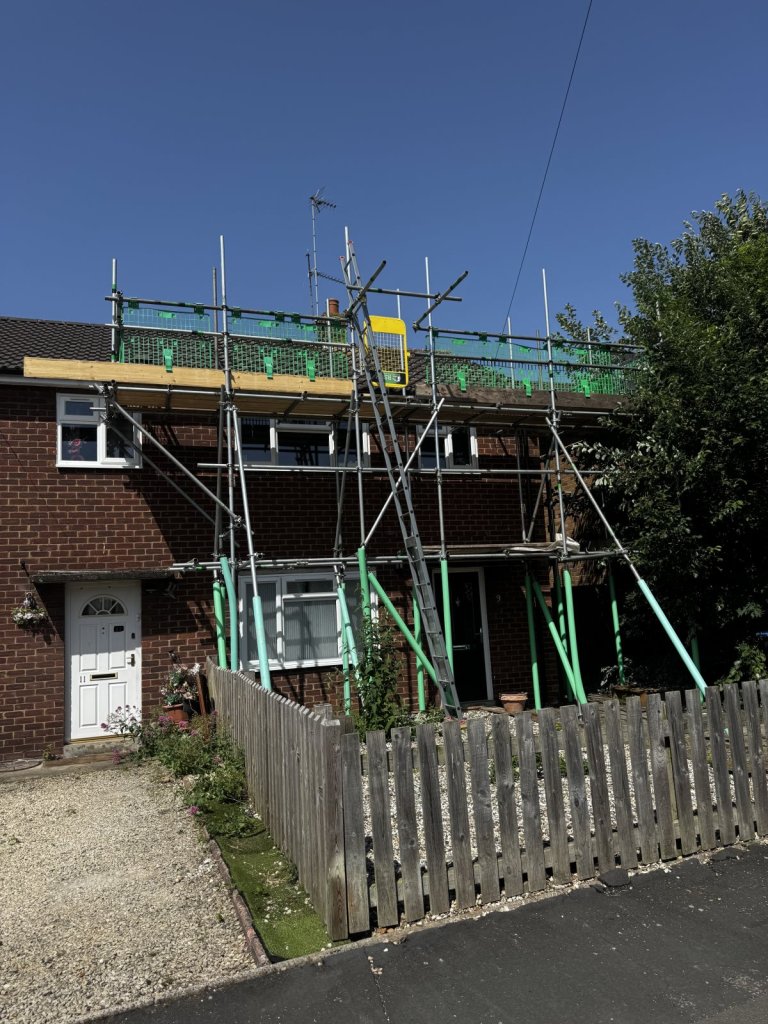
- Even in residential and domestic projects, scaffolding requires the appropriate protection for the project
Edge Protection During Scaffold Erection and Dismantling
Fall protection is an essential aspect to focus on throughout the entire scaffolding process. This should include all stages from erection to dismantling. Safe working practices should be able to reduce the time scaffolders are exposed to unprotected edges, depending on the project that can involve guardrails, specialist equipment and established erection methods.
Now, while the HSE doesn’t outline that advanced guardrails are essential to every situation, there must be suitable measures to prevent falls. This should be implemented by competent and appropriately trained scaffolders.
How Is Scaffold Edge Protection Inspected?
Scaffold inspections should confirm that all edge protection remains secure, complete and suitable throughout the whole project. These checks should identify missing or displaced guardrails, gaps, damaged toe boards, loose fittings and any changes around any loading or access areas.
Construction scaffolds must be inspected before first use and at least every seven days or after any significant alterations, adverse weather or other events that could impact safety.
Explore our top eight scaffolding safety tips for more guidance.
Why Professional Scaffold Design Matters for Edge Protection
Edge protection should form part of the scaffold design from the outset. Building dimensions, intended use, loading, access and site conditions all influence the final configuration.
Some of the more complex project designs may require specialist calculations, particularly for loading bays, roof work, sheeting, public areas or unusual structures. RSUK combines experienced scaffolding teams with design expertise, inspection services and knowledge across domestic, commercial and industrial projects.
Safe, Compliant Scaffolding from RSUK
Edge protection is an essential part of a well-planned scaffold system. With over 40 years’ experience, RSUK designs and installs tailored scaffolding for domestic, commercial and industrial projects, combining practical expertise, safe access and professional standards.

FAQs
What is edge protection on scaffolding?
Scaffold edge protection is a collective safety system that is fitted around the exposed edges of working platforms. It commonly includes parts such as guardrails, intermediate rails and toe boards, all of which prevent people or objects falling.
What height should scaffold guardrails be in the UK?
For construction work, the top scaffold guardrail must be at least 950 mm above the edge from which someone could fall. Different requirements can apply outside construction depending on the circumstances.
Are toe boards required on scaffolding?
Toe boards are required where suitable edge protection is needed to prevent people or materials falling. They must be suitable and sufficient for the particular risk rather than meeting one universal prescribed height.
What is the maximum gap allowed between scaffold guardrails?
In regards to construction work, an unprotected vertical gap in the scaffolding edges must not exceed 470 mm. Intermediate guardrails or the equivalent protection option are crucial.
Who is responsible for checking scaffolding edge protection?
Scaffold inspections must be carried out by a competent person with suitable knowledge, training and experience. Those hiring or using scaffolding also have responsibilities for ensuring required inspections take place.
WE ARE RSUK
Related Blogs
RSUK is a reputable scaffolding business based in Coventry. We serve customers in Leicester, Birmingham, Coventry, and the surrounding areas.