Coventry’s only 5-Star Rated scaffolding company
How Much Scaffolding Do I Need?
Knowing the answer to, ‘how much scaffolding do I need?’ is one of the first questions asked when planning construction, maintenance or renovation work. The answer is rarely straightforward. Every project is different, and scaffolding requirements can vary significantly depending on factors such as building height, layout, access restrictions, duration of work and any safety considerations.
Because of these variables, an accurate assessment is essential to ensure the correct system is installed. This is where professional guidance becomes invaluable.
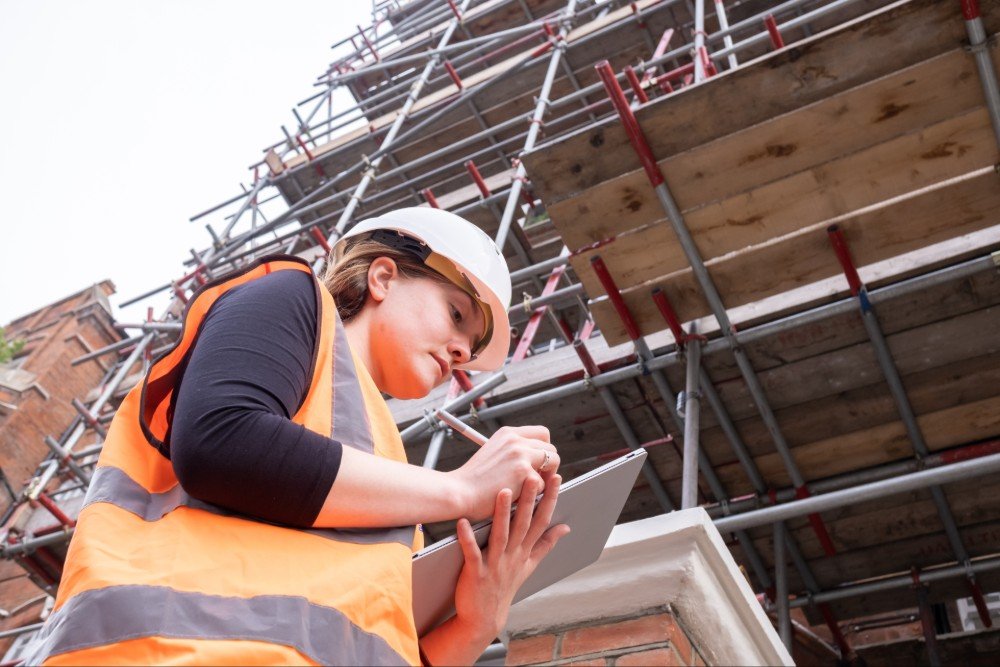
With extensive industry experience, RSUK is well placed to assess individual project needs and provide clear, reliable advice. Detailed surveys, expert recommendations and fast, accurate quotes are all part of the service, ensuring each job is properly supported from the start.
What Determines How Much Scaffolding You Need?
Scaffolding requirements are influenced by several key factors, which means there is no “one size fits all” solution. The height and width of the structure in question are primary considerations, as taller buildings or expansive areas naturally require more extensive scaffolding. The type of work being undertaken also plays a significant role; tasks like painting, brickwork or general maintenance can demand different access points and platform configurations.
Site conditions are another important factor. Uneven ground, limited access or nearby obstacles may require additional support or customised scaffolding solutions. Similarly, the duration of the project affects the choice of scaffolding materials and the level of stability needed. Safety and compliance with regulations cannot be overlooked, as incorrectly specified scaffolding can pose serious risks to workers and the public.
Professional assessment for how much scaffolding you need ensures that all these variables are properly accounted for. Experienced scaffolding experts, like the team here at RSUK, can accurately calculate requirements, recommend the most suitable systems and guarantee that installations meet both safety standards and project needs.
Building Size and Layout
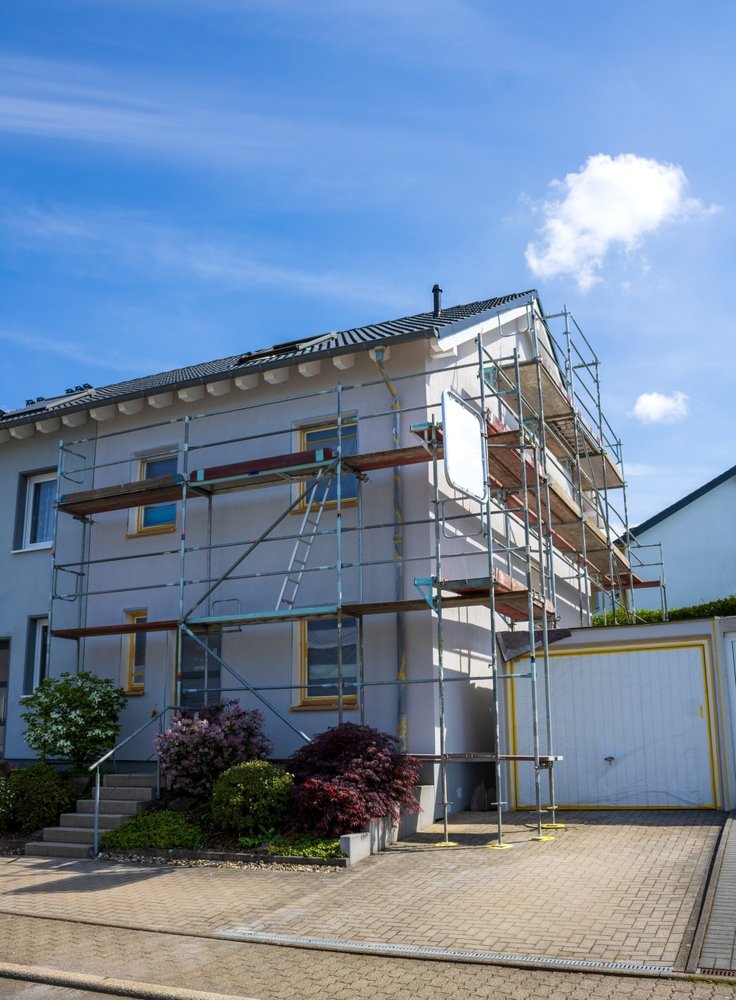
The overall size and layout of a building have a direct impact on how much scaffolding is required. The length, width and height of a property will determine the total scaffold volume. Both larger and taller structures require more materials, platforms, and support to ensure safe access. A small, single-storey property will typically need far less scaffolding than a multi-storey building with extensive frontage.
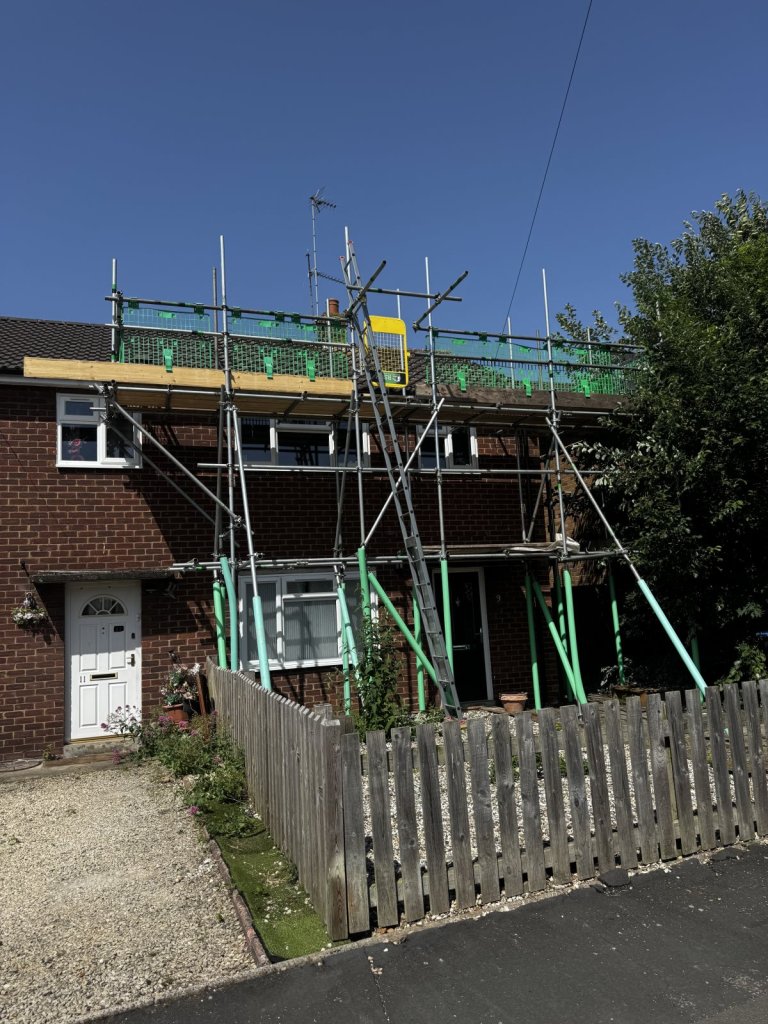
The type of building also makes a noticeable difference. Terraced properties often require domestic scaffolding to a single elevation, while semi-detached and detached homes may need access to multiple sides. Commercial and industrial scaffolding usually demands more complex and extensive systems due to their scale and working requirements.
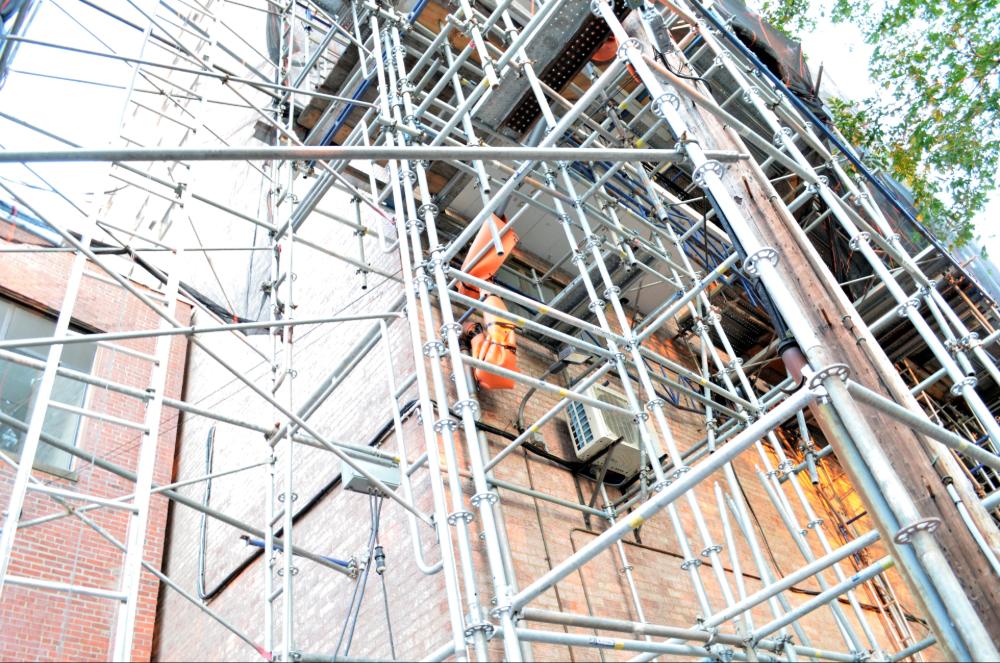
Irregular building shapes, extensions or multiple elevations can further increase scaffolding needs, as additional lifts and adjustments are often required. In some cases, wraparound scaffolding may be necessary instead of single-elevation scaffolding, significantly increasing the overall amount needed.
Type of Project Being Carried Out
The type of work being carried out has a major influence on both the design and quantity of scaffolding required. Different tasks demand different levels of access, load capacities and platform layout. For example, roof repairs often require scaffolding to reach ridge height, with additional edge protection and working platforms. Rendering or repointing usually involves continuous access along an entire elevation, increasing the overall scaffold length and number of lifts needed.
Projects like solar panel installation may require wide, stable platforms to safely accommodate installers, tools and equipment at height. Where heavier tools or materials are involved, stronger scaffolding systems with increased load-bearing capacity are essential. Longer project durations can also impact requirements, as scaffolding must remain stable and compliant over extended periods.
Correct scaffold sizing plays a crucial role in both safety and efficiency.
How Many Lifts (Working Levels) Are Required?
In terms of scaffolding, a “lift” refers to a horizontal working platform built at a specific height. Each lift allows safe access to a particular section of a building, enabling work to be carried out efficiently and in line with safety regulations.
The height of a property is the main factor in determining how many lifts are required. As a building increases in height, additional lifts are needed to provide continuous and secure access at different working levels. For multi-storey properties or projects involving roof-level work, several lifts may be necessary to ensure safe movement and adequate support throughout the structure.
Working at height often requires more scaffolding than expected. Extra lifts, guardrails and support components are commonly needed to meet safety standards and protect both workers and the public. A professional assessment ensures the correct number of lifts are installed when working out how much scaffolding you need.
Access, Ground Conditions and Surroundings
Site access and surrounding conditions play another crucial role in determining scaffold design and overall requirements. Properties located on narrow streets, with shared driveways or limited access, often require more complex scaffolding solutions. Restricted access can affect how materials are delivered, erected and secured, sometimes increasing the amount of scaffolding needed to maintain safe working areas.
Ground conditions are equally important. Uneven surfaces, sloping ground or soft ground can significantly increase scaffold complexity, as additional base support, levelling equipment or specialist foundations may be required. These measures ensure the structure remains stable and safe throughout the project.
Nearby buildings, boundaries or public walkways can also influence design, often requiring additional protection or adjustments to prevent becoming obstructions.

Safety, Regulations and Compliance
In the UK, scaffolding must comply with strict safety regulations designed to protect workers, occupants and the public. Requirements are set out under legislation such as the Work at Height Regulations, which outline how scaffolding should be designed, erected and maintained. Regular inspections are required on-site, particularly after installation, any adverse weather or alterations, no matter how small.
Key safety features include clearly defined load limits, secure guard rails, toe boards to prevent materials from falling and protective netting where necessary. These elements are essential to reduce the risk of accidents and ensure safe working conditions at height.
Cutting corners on scaffolding can have serious consequences. Poorly specified or non-compliant structures can cause project delays, enforcement action, fines or injury. Ensuring full compliance from the get-go helps projects run smoothly and safely.
Why a Professional Scaffolding Quote Is Always Best
Choosing the right scaffolding company is an essential practice for safety, efficiency and value. Scaffolding provides a stable platform for work at height, so the dependability of your provider directly affects your project’s success. When evaluating options, consider experience and industry accreditations first, as these signal proven capability and professionalism.
Here at RSUK, our team is committed to adhering to UK safety standards. This includes installing required protection features and carrying out regular inspections throughout the job. We have over four decades of experience in the scaffolding industry and our team of CITB-qualified workers can provide you the best, most comprehensive scaffolding experience yet.
We make knowing how much scaffolding you need, what types, for how long and more so much easier. By offering a full, tailored, turnkey solution to your scaffolding needs, we can work with domestic, commercial and industrial projects with ease.
Get Expert Advice from RSUK Scaffolding
Not sure what scaffolding you need or how quickly you need it? Our team is here to help. At RSUK, we provide clear, honest advice from experienced professionals who understand domestic, commercial and industrial projects. We work across Coventry, Birmingham and throughout the rest of the West Midlands, so expert support is always close by. From the first professional assessment to installation, we respond fast, communicate clearly and keep your project moving.
Speak directly to friendly specialists who will assess your site, recommend the right solution and deliver on time. Call RSUK today or request a quote online for expert advice and rapid, reliable service. Trusted locally, compliant, insured and ready when you are.
WE ARE RSUK
Related Blogs
RSUK is a reputable scaffolding business based in Coventry. We serve customers in Leicester, Birmingham, Coventry, and the surrounding areas.