Coventry’s only 5-Star Rated scaffolding company
Do You Need a Permit for Scaffolding?
Scaffolding is crucial for all kinds of projects, from construction to renovations and roofing. Because these structures are often tall and erected on a temporary basis, they sometimes require additional permits for safety reasons.
So, when do you need a permit for scaffolding, how do you get one and what happens if you don’t? At RSUK, we’ve been erecting reliable scaffolding for projects of all kinds for more than 40 years. We’ve put together this complete guide to scaffolding permits to answer all these questions.
Stick with us to learn more, or to speak directly to an expert, just call us on 024 7531 4575.
What is a Scaffolding Permit?
A scaffolding permit is a legal document issued by a local authority giving permission to the recipient to erect scaffolding in a public place. Permits for scaffolding aren’t required for structures on private property, but if they are on or overlap public highways or spaces, the scaffolder will need to obtain a permit.
It’s the scaffolder’s responsibility to obtain the permit, but it’s your responsibility as the person commissioning the scaffolding to check that they have. Scaffolding permits are usually valid for around four weeks and are only issued to registered scaffolding companies.
When Do You Need a Permit for Scaffolding?
Scaffolding on Private Property
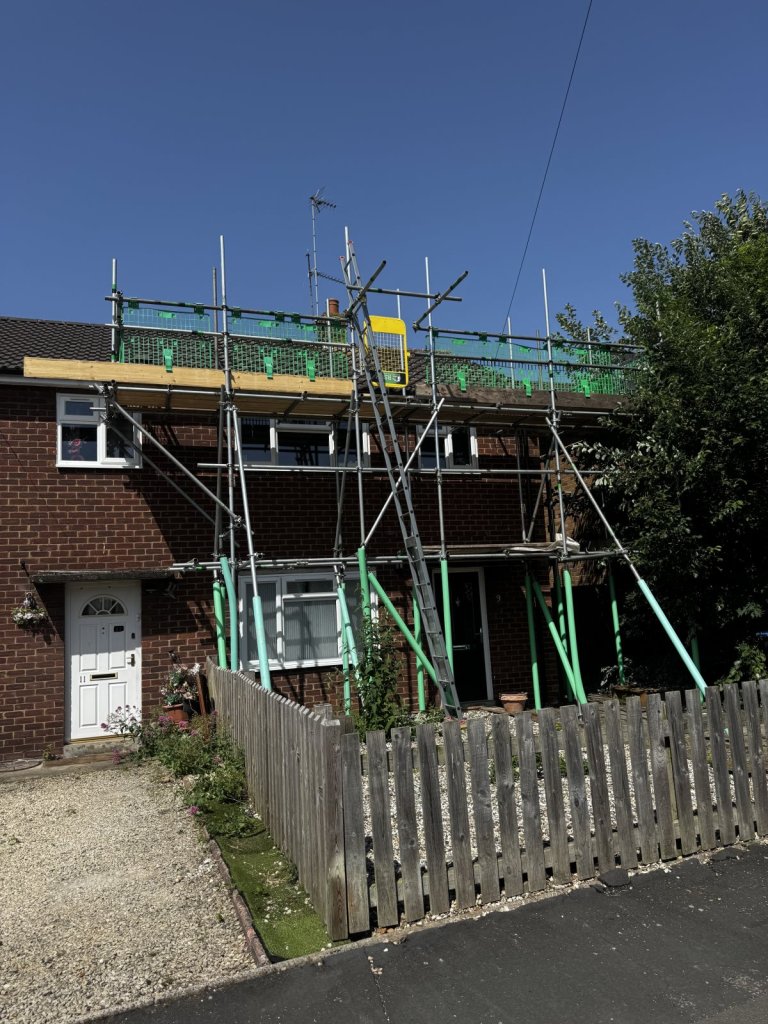
Do you need a permit for domestic scaffolding on private property? No. As long as the scaffolding is erected wholly on private land and doesn’t overlap or overhang any public areas or highways, you won’t need a permit for it.
However, the scaffolding provider will still be required to operate in accordance with health and safety regulations.
Scaffolding on Public Pavements or Roads
If your scaffolding is to be assembled on public land or will overhang it, you’ll need to apply for a scaffolding permit from the relevant local authority. This applies to all public areas, including open spaces, roads, pavements, cycle lanes and more.
The permit process serves as proof to the local government that the scaffolder is properly registered and accredited. It also ensures they have thoroughly planned the structure of the scaffolding to keep workers and the public safe.
Business and Commercial Projects
Business and commercial projects do not always require a permit for scaffolding, depending on whether the structure will overlap public spaces. However, local authorities can sometimes place stricter conditions on commercial scaffolding because of the larger scales involved, and additional permits might be necessary.
How to Apply for a Scaffolding Permit
Who Applies for the Permit?
If a scaffolding permit is required, it’s the responsibility of the scaffolding provider to apply for it before the scaffolding is erected. However, the person commissioning the scaffolding is required to make sure that the provider has all their permits and accreditations in place.
The Application Process
In order to apply for a scaffolding permit, you’ll have to contact your local authority. Many have a digital portal for you to apply through to make the process easier. Usually, you’ll be asked to submit:
- A copy of your public liability insurance certificate
- The proposed start and end dates
- A clear photograph and precise description of the intended location
- A copy of your CISRS (or equivalent) qualification
- The type of scaffolding and the dimensions
- A copy of your New Roads and Street Works Act accreditation
Costs and Duration
As well as fulfilling the documentation requirements for your application, you’ll also need to pay a fee to obtain a permit for scaffolding. This can range from around £100 to £300 or more, depending on the local authority in question.
Once you receive the permit, it will typically be valid for around four weeks and can usually be easily renewed via the local authority that issued it. There is often a renewal fee, but it will be far less than the initial cost.
What Happens If You Don’t Get a Permit for Scaffolding?
So, do you need a permit for scaffolding before you start erecting it? Absolutely. You can sometimes apply for a retrospective permit, but the fee for this will be two or three times the cost of applying beforehand.
If you don’t apply for a permit, you can be subject to a range of penalties from the local authority. As well as fines, the council may remove the scaffolding themselves and charge you for the cost.
This is not only potentially costly, but it can damage your reputation and cause serious setbacks to projects.
Safety and Legal Considerations Beyond Permits
Aside from scaffolding permits, there is also a series of other regulations that scaffolding and scaffolders are subject to. For example, scaffolding must be erected in accordance with health and safety standards and routinely inspected before first use, every seven days after construction and after any alterations, damage or adverse weather conditions.
While the guidelines around permits for scaffolding are well established, it’s always advisable to check with your local authority before erecting any structure.
The best way to ensure compliance is to work with a trusted, accredited scaffolding provider such as RSUK. We’re the only five-star rated Coventry scaffolding provider, fully accredited and with more than four decades of experience on projects of all kinds, from domestic to commercial.
For a free quote for your project, just call us on 02475314576, email us at enquiries@rsuk.org.uk or fill out our contact form.
WE ARE RSUK
Related Blogs
RSUK is a reputable scaffolding business based in Coventry. We serve customers in Leicester, Birmingham, Coventry, and the surrounding areas.