Coventry’s only 5-Star Rated scaffolding company
What’s the Difference Between Commercial and Industrial Scaffolding?
Aside from domestic scaffolding, there are two main types of scaffolding: commercial and industrial. In this expert guide, we’re going to break down the key differences between industrial vs commercial scaffolding, including the different applications and safety requirements.
Keep reading to learn more, or to speak directly to a member of our friendly team, just call us on 024 7531 4576.
What is Commercial Scaffolding?
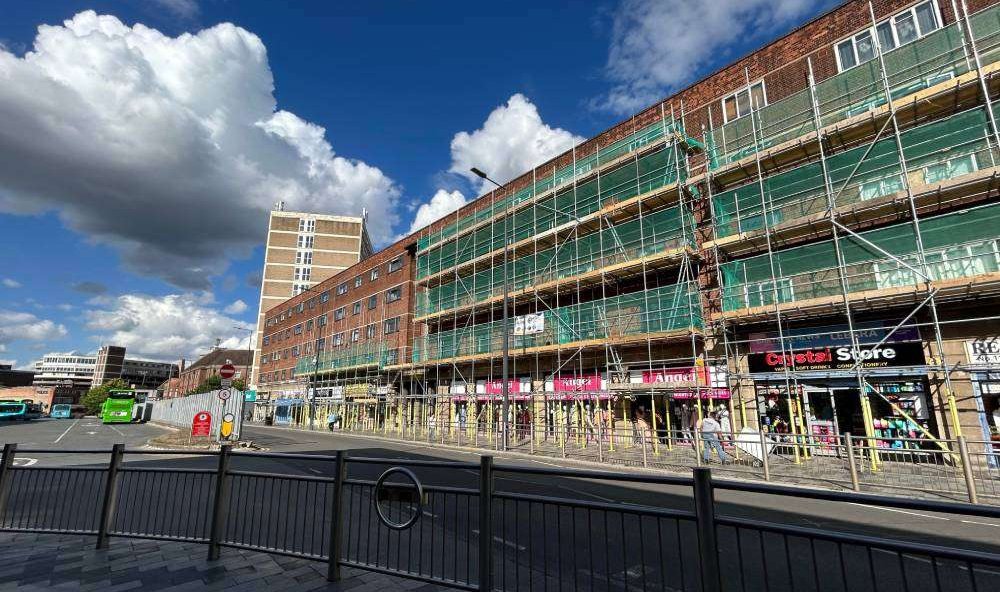
Commercial scaffolding is used to provide temporary access for construction, maintenance and refurbishment projects at commercial sites. This includes schools, offices, retail premises and public properties. Commercial scaffolding is designed to allow labourers to work efficiently and safely at heights, ensuring compliance with legal standards.
It’s usually more straightforward than industrial scaffolding, and can be erected and adapted relatively quickly to keep up with fast-paced projects. As with all scaffolding, commercial scaffolding needs to be constructed with regulatory standards in mind, and routinely inspected for safety.
Commercial Scaffolding Safety Requirements
All scaffolding is subject to strict safety standards, including HSE guidelines and the Work at Height Regulations. However, because commercial scaffolding structures are often especially large and built to much greater heights than domestic scaffolding, particular attention must be paid to safety standards at all times including regular safety inspections.
Commercial Scaffolding Applications
Commercial scaffolding is hugely versatile and used for a wide range of applications including:
- Construction
- Maintenance and repair work
- Exterior painting and decorating
- Roof repairs and inspections
- Window replacement and installation
- Refurbishment projects
- Shopfront and signage installation
- Inspection access
What is Industrial Scaffolding?
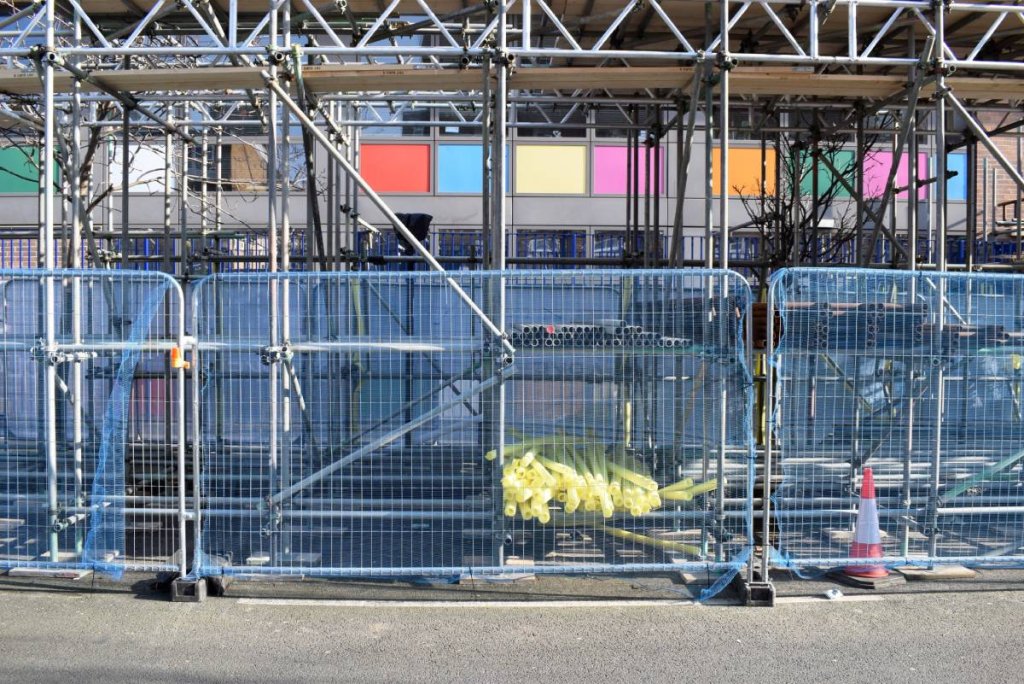
Industrial scaffolding is typically more complex than commercial scaffolding, and is used in demanding, high-risk environments such as refineries, manufacturing plants and power facilities. It is used to accommodate more specialised projects, equipment and machinery and often requires bespoke designs to fit around existing equipment and restricted or unusual site layouts.
Conditions for surrounding industrial scaffolding can be higher risk than with commercial scaffolding. Additional considerations might also need to be made for factors such as heat or chemicals. Issues such as load requirements, access and structural configurations can also be more complex when it comes to industrial scaffolding.
Industrial Scaffolding Safety Requirements
Industrial scaffolding comes with a long list of safety requirements. Aside from the general guidelines and regulations that apply to all scaffolding, including the 3 to 1 rule, industrial scaffolding also needs to account for the manoeuvring of specialised or large equipment.
Proper safety measures including guardrails, stable platforms and fall arrest systems must be present to protect workers and scaffolders alike, along with regular safety inspections.
Industrial Scaffolding Applications
As a specialised, bespoke installation, industrial scaffolding can be adapted to suit a variety of requirements:
- Oil, gas and chemical sites
- Plant maintenance and inspections
- Access around equipment and machinery
- Power plants
- Storage tank and silo access
- Pipework inspection, installation and maintenance
- Industrial construction projects
- Inspection and compliance work
Key Differences Between Commercial and Industrial Scaffolding
When it comes to industrial vs commercial scaffolding, there are some key differences which set them apart:
- Installation environment – Commercial scaffolding is usually used for construction projects, offices, public buildings and retail premises, whereas industrial scaffolding is tailored to refineries, factories, industrial sites and power plants.
- Design complexity – Commercial scaffolding is straightforward and designed to be erected and adapted quickly, while industrial scaffolding requires careful and precise design to be used in more demanding conditions and hard-to-reach areas.
- Risk level – Commercial projects typically carry relatively lower risk, but industrial scaffolding is often installed in higher risk settings where heat, chemicals and moving equipment need to be considered.
- Load requirements – Industrial scaffolding must be designed with higher weight requirements in mind, as opposed to commercial scaffolding, which often only needs to accommodate workers and standard materials and tools.
- Planning and coordination – Because commercial scaffolding is usually more straightforward, it requires less planning than industrial scaffolding, which can involve bespoke designs.
- Duration and usage – Due to the complexity involved, industrial scaffolding will often be installed for longer durations than commercial scaffolding, but every project is different and both types can be installed for as long as is required.
Choosing the Right Type of Scaffolding
Selecting the right type of scaffolding for your project is a case of evaluating the type of work you’re carrying out as well as the site conditions. For example, if you need a simple scaffold to repair a roof at an office building, then commercial scaffolding will be perfect. Alternatively, if you need to carry out extensive repairs to plant or storage equipment at an oil refinery, industrial scaffolding will be more suitable.
Read our guide to find out more information about the different types of scaffolding and how to choose the right one.
Get Expert Scaffolding Advice From RSUK
The best way to understand which kind of scaffolding you need is to speak to an expert team. At RSUK we’ve been providing dependable, bespoke scaffolding services across the Midlands for more than 40 years. We can design, erect and maintain scaffolding of all types, including commercial and industrial scaffolding.
Based in Coventry, we’re the city’s only five-star rated scaffolding provider, with a highly trained team and accreditations from key bodies including Acclaim, CHAS, CISRS and Smas Worksafe.
Get a free scaffolding quote today by calling 024 7531 4576, emailing enquiries@rsuk.org.uk or filling out our contact form.
WE ARE RSUK
Related Blogs
RSUK is a reputable scaffolding business based in Coventry. We serve customers in Leicester, Birmingham, Coventry, and the surrounding areas.